
 Simone
smoke和smoking的区别是什么?
的有关信息介绍如下:smoke和smoking的区别如下所示。
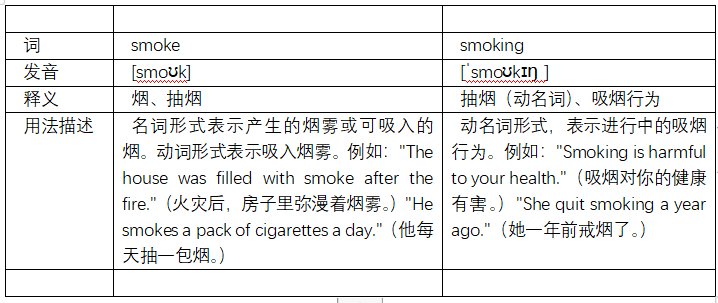
1. 释义区别:
- "smoke"是名词,指的是烟雾或吸烟的行为。
- "smoking"是动词的现在分词形式,专指吸烟的行为或习惯。
例句:
- The room was filled with smoke. (房间里弥漫着烟雾。)
- Smoking is harmful to your health. (吸烟对健康有害。)
2. 用法区别:
- "smoke"作为名词,可以表示烟雾、烟囱冒的烟或烟草制品。
- "smoking"作为动词的现在分词形式,用来指代吸烟的行为或习惯。
例句:
- He could see the smoke rising from the chimney. (他能看见烟囱冒出的烟。)
- I quit smoking last year. (我去年戒烟了。)
3. 使用环境区别:
- "smoke"可用于描述任何产生的烟雾或烟的情景,如火灾、烟囱、香烟等等。
- "smoking"则更专门用于描述吸烟这一行为或习惯。
例句:
- The smoke alarm went off when there was a fire in the building. (当楼里起火时,烟雾警报器响了。)
- Smoking is not allowed inside the office building. (在办公楼内禁止吸烟。)
4. 形象区别:
- "smoke"的形象是烟雾升腾、弥漫的景象,与燃烧或蒸发有关。
- "smoking"的形象则与吸烟行为或习惯有关,具有健康、社交或生活习惯等方面的形象。
例句:
- The smoke from the campfire curled up into the night sky. (篝火冒出的烟雾在夜空中卷曲上升。)
- He has been smoking for years and it's difficult for him to quit. (他吸烟已经多年了,戒烟对他来说很困难。)
5. 影响范围区别:
- "smoke"的范围更广,可以用于各种烟雾或烟的情境。
- "smoking"相对更专注于吸烟这一行为或习惯的描述。
例句:
- The smoke from the factory pollutes the surrounding air. (工厂排出的烟雾污染了周围的空气。)
- The campaign aims to reduce smoking among teenagers. (该活动旨在减少青少年吸烟行为。)


